

Brazil’s Outgoing COP30 Presidency Presents an Ambitious Plan to Phase out Fossil Fuels
Annette LaRocco – Dan ‘63 and Betty Churchill Associate Professor of Climate Policy and International Affairs
The COP may be hosted in Turkiye this year, but the influence of the Brazil COP30 presidency is still being felt. In a high profile event led by the COP30 President Andre Correa do Lago, prominent diplomats including the UN Secretary General Antonio Guterres and the Executive Secretary of the UNFCCC Simon Stiell unveiled the COP30 Presidency Roadmap for Transitioning Away from Fossil Fuels in Energy Systems, in a just, orderly and equitable manner, accelerating action in this critical decade, so as to achieve net zero by 2050 in keeping with the science. This ambitious document lays out practical plans for transitioning away from fossil fuels, and describes this process “urgent, inevitable and yet possible.”
In introducing the roadmap, all the speakers emphasized that the parties had already reached consensus on transitioning away from fossil fuels at the 2023 COP28 decision in Dubai. However, the intervening years since that landmark commitment have seen backsliding away from this goal. Though it was a priority of the Brazilian presidency, the COP30 ended without formally incorporating further progress on the issue, despite support from nearly 80 countries. Undeterred by this disappointment, the Brazilian presidency used the remaining period of their tenure (they handed over the Presidency to Türkiye at Monday’s opening plenary) to forge ahead with the roadmap document. The work incorporates over a hundred written submissions and feedback from consultative dialogues accumulated since the end of last year’s climate conference. This effort was surely bolstered by the First International Conference on Transitioning Away from Fossil Fuels held in Santa Marta in April 2026, where over 50 countries committed to phasing out the use of fossil fuels. The aim of the roadmap announced in Tuesday’s session is to outline actionable implementation pathways for countries to determine their energy transitions at a national level, and in accordance with their varied economic and social contexts.
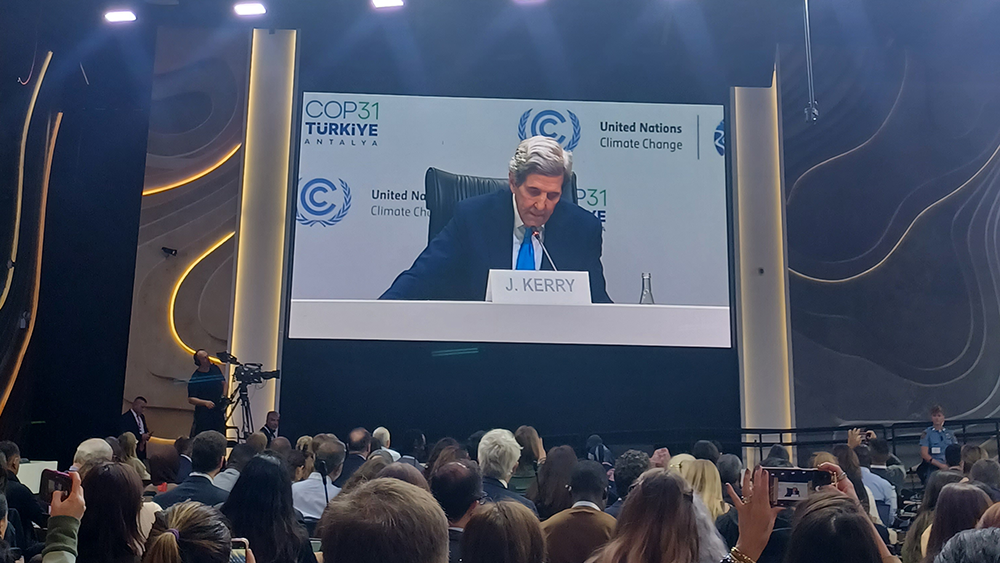
Aligned with my own research interests in how the national and international spheres interact in climate policy negotiations, domestic politics and recent electoral outcomes were featured prominently in discussions of the roadmap. On several occasions, the assembled leadership of Brazil COP30 team made reference to the unprecedented comeback victory of President Luiz Inacio Lula da Silva in the second round of Brazilian elections. During the discussion of his victory, Marina Silva–Brazil’s Minister of Environment during COP30–even flashed the iconic “L” hand signal common among supporters of Lula and his party. His win was heralded during the session as a victory for the Amazon. Under Lula’s presidency, deforestation has dropped to its lowest levels since the 1980s, and his opponent was widely considered unlikely to continue to prioritize protection of the Amazon. Similarly, former U.S. Secretary of State and U.S. Special Presidential Envoy for Climate, John Kerry argued that last week’s midterm elections in the United States, which saw the largest win for the party out of power since 1974’s post-Watergate election, was another victory for climate. Though explicit mention of party domestic politics are typically avoided within the formal negotiations, the various direct references to domestic electoral outcomes as signaling the direction of political will regarding climate policy is not out of place. The structure of the Paris Agreement means that states are responsible for setting their own emissions reduction targets and plans via their Nationally Determined Contributions. In this context, domestic politics does drive both political will and climate ambition. With the world on track to overshoot 1.5 degrees of warming and fossil fuel interests (including private companies and producer states) successfully obstructing further movement on operationalizing the transition away from fossil fuels at COP29 and COP30, the roadmap offers an intriguing opportunity for individual, sovereign states to achieve energy security and gain independence from the volatile global market in fossil fuels, as well as address the climate crisis.
Official photos (from the event and they are all creative commons)